
Getting Lincoln County Court Records
Start with two facts: the case type and the court. The Lincoln County Superior and Juvenile Clerk holds Superior civil and criminal files. Juvenile records sit there too. Estates, guardianships, lower civil cases, and warrants sit with the separate Probate and Magistrate office. Lincolnton Municipal Court keeps its own city traffic and ordinance records. Juvenile access is restricted, so never treat it like ordinary public Superior access.
Use whatever channel the owning court allows. Lincoln Superior appears in the official Georgia Courts eAccess directory. That directory routes docket searches through PeachCourt. A free provider account is required. State public-access rules also preserve a no-cost courthouse terminal for electronically filed records. The exact terminal location is not published locally, so ask the Clerk. Copies are available at the counter, by phone, mail, or fax as well.
- Identify the exact court and gather the case number, names, case type, and approximate filing date.
- For Lincoln Superior, register with PeachCourt and review the docket before buying document images.
- Ask the correct clerk whether the record is available on a free public terminal.
- For a written request, name the document, preferred format, and whether certification is needed.
- Confirm charges and delivery method before payment, then retain the clerk's response.
Send Superior Court requests by mail to P.O. Box 340, Lincolnton, GA 30817, or fax them to 706-359-5027. If you are unsure which file you need or what copy type fits, call 706-359-5505 first.
Three Lincoln Record Routes
The same Lincoln County court record can look different depending on the route you take. A provider search wins on speed. The free terminal is the no-cost electronic option. For a certified copy, a file that is not online, or a question about access, a clerk request is the authoritative route.
| Route | Best use | Limit |
|---|---|---|
| PeachCourt account | Lincoln Superior docket and available images | Login required; image charges may apply |
| Public terminal | No-cost viewing of available e-filed records | Ask the Clerk where access works |
| Clerk request | Certified, offline, redacted, or court-specific copies | Charges and restrictions vary |
A failed online search is not proof that a record is missing. The case may sit in another Lincoln court. It could predate the available index, carry a different spelling, or have restricted electronic access.
Lincoln County Court Record Types
A case file holds more than its docket. The docket is just the chronological index, and it may list a filing without showing the image. Public portions can include:
- complaints, petitions, answers, motions, and briefs;
- summonses, proofs of service, subpoenas, and notices;
- affidavits, exhibits, attachments, and public financial forms;
- orders, judgments, dispositions, and notices of appeal;
- Probate or Magistrate materials outside the Superior system.
The Superior Clerk keeps more than court files. Deeds, plats, liens, judgments, and military discharges go into that office's permanent records too. Those items live outside the Lincoln County court docket. So a civil judgment can carry both a docket entry and a recorded counterpart. Before you chase one, ask which clerk index owns it.
Lincoln Dockets Versus Documents
PeachCourt splits its access into two parts: eAccess and Document Access. Treat the docket entry and the document title as two separate facts in your notes. If an image opened, say so. Did the system show a fee prompt? Was material marked redacted or restricted? Write that down too.
Practical check: A docket line proves that an event was indexed. It does not prove the full document is public, complete, or free.
The assigned image is drawn from CourtListener and its RECAP collection, a secondary source for federal filings.
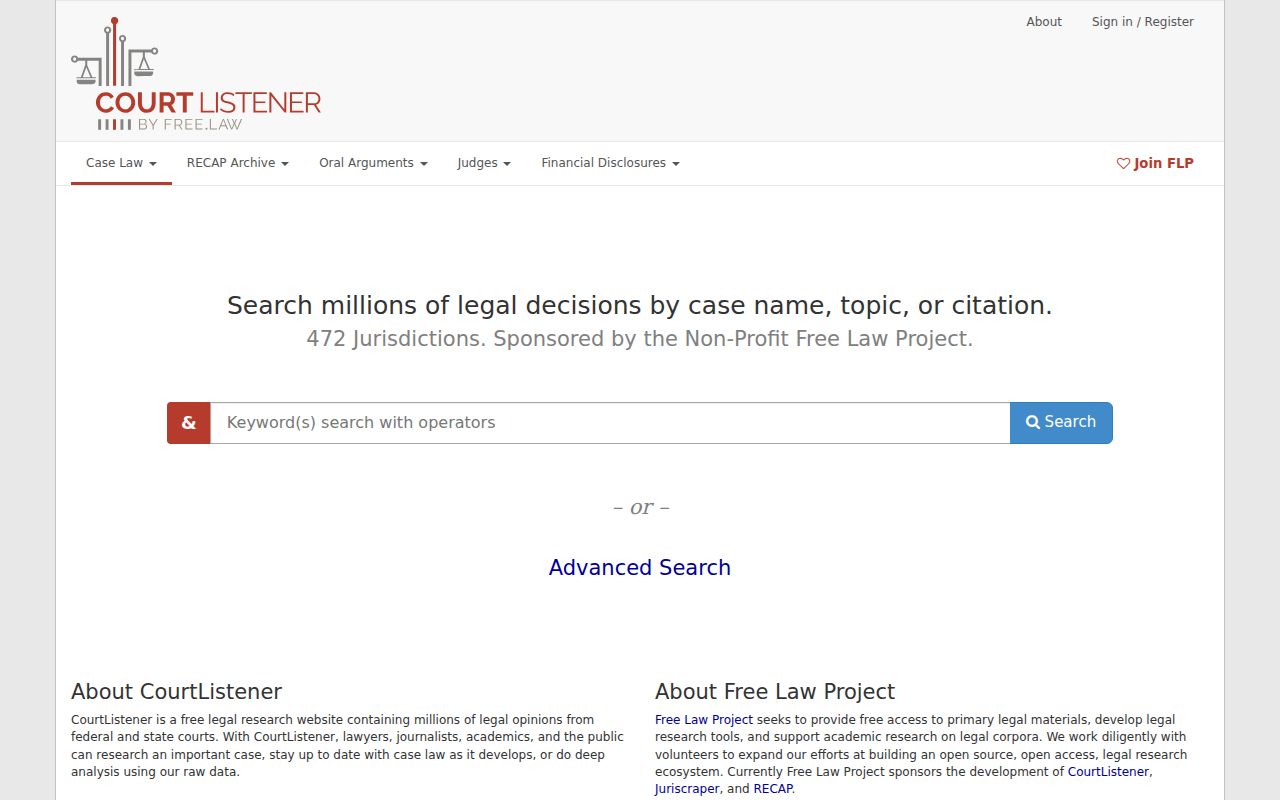
A mirror like that can help you spot a federal filing, but it is not Lincoln County's official docket of record. For the current or certified federal file, go to PACER or the federal clerk.
Inside a Lincoln County Court Record
Start with the index page of the Lincoln County court record. It lists each filing in order, so you can tie every document you want to the event behind it. An active record can show several fields, though what you actually see depends on the court and your access level.
| Case identity | Court, case number, filing date, and case type. |
|---|---|
| Parties and counsel | Public names and attorney appearances, with protected details removed. |
| Filing event | Document title, filed date, sequence, and filing party. |
| Setting | Calendar date, hearing type, judge, and later reset. |
| Outcome | Order, judgment, disposition, sentence, or appeal entry. |
| Access marker | Redaction, seal, fee prompt, unavailable image, or clerk-only access. |
One caution about reading a Lincoln County docket from the bottom up: a late entry can undo an earlier one. Before treating the last item on the screen as final, ask the clerk whether an amended judgment or a superseding order exists.
Writing a Lincoln Record Request
A tight, specific request gets an answer from the clerk faster. Name the court, the case number, the document title, and roughly when it was filed. Then state the format you want. Say how it should reach you, and whether a plain or certified copy will do. Leave out protected identifiers unless staff asked for them.
For a walk-in, the Superior and Juvenile office sits at 210 Humphrey Street. Hours are Monday through Friday, 8:00 a.m. to 5:00 p.m. Probate and Magistrate filings go through 160B School Street, P.O. Box 205, with phone at 706-359-5528 and fax at 706-359-5520 during the same weekday hours. If you mail a request, add a return address. That way the office can send you a cost quote.
Sometimes only part of a document is protected. In that case, ask the clerk for a segregated public copy. Ask for the restricted information to be stripped out. That is a normal request. It is not the same as asking staff to reveal sealed content.
Fees and Certified Copies
A certified copy carries the clerk's word that it matches the official record. A plain copy works fine for personal research. But a filing destination may insist on certification. Lincoln County publishes no complete fee schedule for record copies. So ask the clerk for current costs. PeachCourt's terms lay out eAccess document charges, per-page Document Access charges, and a convenience fee, though the amounts can shift.
| Item | Amount | Confirm with |
|---|---|---|
| PeachCourt document | Current provider rate | Live terms before purchase |
| Plain clerk copy | Not published locally | Owning Lincoln clerk |
| Certified clerk copy | Not published locally | Owning Lincoln clerk |
Ask the clerk for a full estimate first. Provider and clerk charges are separate, and an online image is not a certified copy.
Lincoln Records Across Time
Old files and live cases live in separate systems. The Digital Library of Georgia's Lincoln County collection covers historical cases. Warrants, petitions, summonses, debt matters, FIFAs, and property records are in it too. It suits genealogy and history work. It will not tell you the status of a current case.
The courthouse itself dates to 1915, but its age tells you nothing about format. A Lincoln County record could sit in paper or in an electronic file. Modern Superior Court access runs through the courthouse, a public terminal, PeachCourt, and the Clerk. Save the archive URL and the capture date for anything you cite. Is the index searchable? That is still no reason to repeat private names you find there.
Sealed Records and Public Access
Court files in Georgia follow a different rule from executive-agency records. The Georgia Attorney General FAQ says so directly. Trial courts sit outside the Georgia Open Records Act. That does not make their files secret. Court rules and statutes can still make a record public. When you ask for a Lincoln case file, address the request to the clerk who holds it. Frame it as a court-record request rather than an open-records demand.
Access rules: Georgia's rules index and Uniform Superior Court Rule 21 govern restriction and redaction. Protected identifiers, sealed files, and Juvenile matters are not ordinary public records.
When an image you expected is missing, the honest move is to ask the clerk why. It may be redacted, sealed, simply not digitized, or held by another office. Do not work around a login screen, and never guess at protected facts from a filename alone.
Lincoln Superior and Juvenile Clerk
Amanda (Mandy) A. Doss
210 Humphrey Street
P.O. Box 340
Lincolnton, GA 30817
706-359-5505
Monday-Friday, 8:00 a.m.-5:00 p.m.
Fax: 706-359-5027
Probate and Magistrate files belong to those offices, so call them first. City traffic or ordinance cases run through the Lincolnton Municipal Court Clerk instead.
Lincoln Permanent Record Indexes
One routing trap trips up many a Lincoln County docket search. A deed, plat, lien, military discharge, or separately recorded judgment can live in the Superior Clerk's permanent records. It may never appear in the court docket you are checking. Name the instrument when you contact the clerk. Ask whether the case index or a real-estate and lien index is the right place to look. The Georgia Clerks Cooperative Authority directory lists the Lincoln clerk contact. It also offers a clean official handoff to clerk-managed record systems.
Need both versions? Request each one separately. The docket copy records the procedural event inside the lawsuit. The recorded instrument is the entry in the permanent public index. Label every copy with its source, retrieval date, and certification status. That way the two never get mixed up later.